
Views: 0 Author: 广东捷程数控机床有限公司 Publish Time: 2026-04-28 Origin: 广东捷程数控机床有限公司


As a high-precision CNC machine tool, the Swiss-type lathe’s latent damage is akin to a chronic disease – it shows no early symptoms, yet gradually erodes machining accuracy and shortens service life over long-term operation, eventually leading to sudden failures and exorbitant repair costs. Therefore, establishing a prevention system that integrates daily inspections, periodic monitoring, and intelligent early warning is the key to ensuring long-term, stable equipment performance.

Before each shift and during operation, the operator should perform a rapid assessment. When the spindle runs at high speed under no load, listen carefully for any intermittent abnormal noises. Observe whether a uniform oil film has formed on the guideway surfaces and whether the lubrication system indicator lights are normal, ensuring that sliding pairs are adequately protected. During bar feeding through the guide bushing, use your hand to feel whether the resistance of the bar stock is uniform. In addition, if chips appear black, it indicates an abnormally high cutting temperature; if chips form long, tangled ribbons, it may impair chip evacuation and surface finish quality. These daily observations require no precision instruments, yet they can capture the earliest signs of latent damage.
Each week, maintenance technicians should perform more targeted checks. Temperature variation in the spindle bearings is a key indicator of their health. If a localised temperature rise is significantly higher than elsewhere, it often points to loss of bearing preload or grease degradation. The fit clearance between the guide bushing and the bar stock needs rapid verification – with the machine stopped, use a standard test bar and a dial indicator for a simple measurement. Once the clearance is found to exceed the reasonable range, it indicates that the bushing has entered an early stage of uneven wear, requiring timely adjustment or replacement. The backlash of the ball screw should also be measured weekly: by executing small forward and reverse movements of the table and reading the difference with a dial indicator. A notably increased backlash indicates that the preload has decayed, leading directly to reduced repeatability.
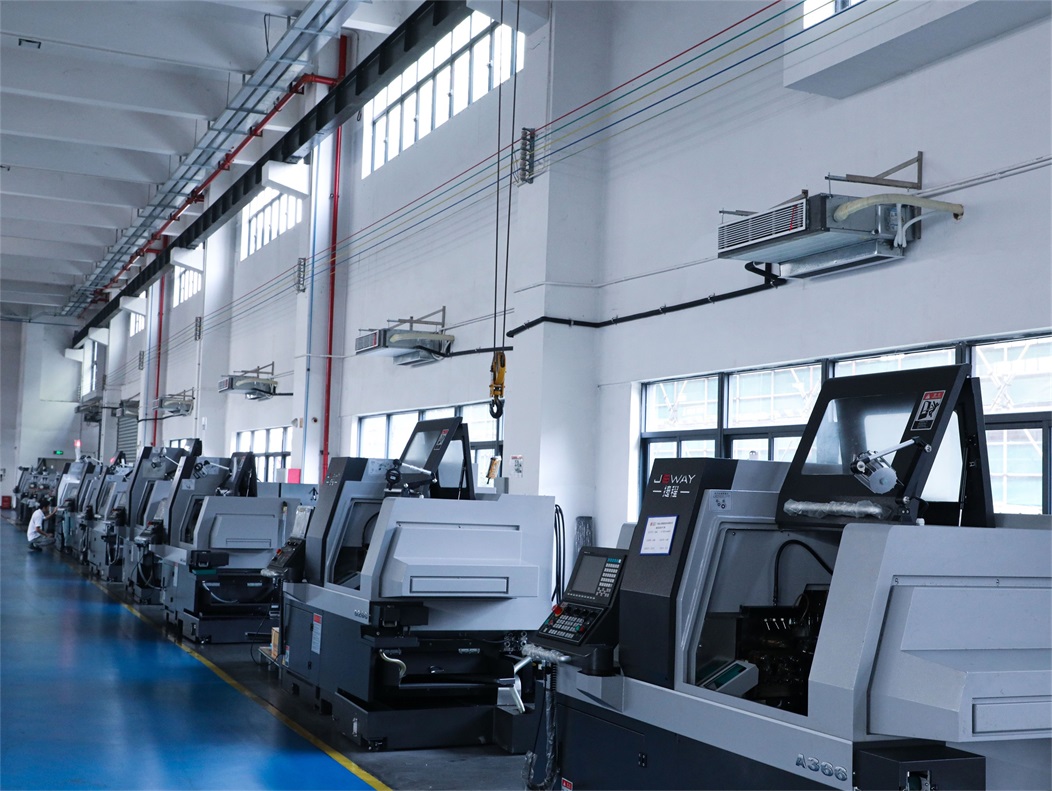
A comprehensive monthly inspection is the core step in preventing latent damage. Guideway straightness must be scanned over the full travel using a laser interferometer – this is the most reliable method for detecting localised wear; even if no depression is visible to the naked eye, the interferometer can pinpoint micron‑level deformation. The vibration signature of the spindle requires a spectrum analyser to convert the time‑domain vibration signal into a frequency‑domain plot, with special attention to the amplitude of the fundamental frequency. A sustained increase in this amplitude signals that micro‑pitting has begun on the bearing rolling elements or raceways. The condition of the coolant should also be evaluated monthly – check its concentration, pH value, and cleanliness. Deteriorated coolant corrodes seals and impairs chip‑flushing ability, indirectly accelerating wear on both guideways and the guide bushing.
At least once a year, a preload restoration procedure should be carried out. Under long‑term alternating loads, the preload of ball screws and spindle bearings gradually decays. Following the manufacturer’s specifications and using dedicated tools, restore the preload to more than ninety percent of its initial value. This eliminates the minute displacements caused by increased clearances and restores the machine’s original rigidity. In addition, full‑travel pitch error compensation and laser calibration should be performed annually – these are effective means of correcting the mismatch between the CNC system and the machine structure that develops after prolonged operation.

Preventing latent damage in Swiss‑type lathes is, in essence, the proactive management of machine accuracy and service life. Every unit of effort invested in prevention avoids several times that cost in accuracy restoration and downtime losses. More importantly, in fields that demand extremely tight tolerance grades – such as medical implants and new energy vehicles – only by consistently maintaining the equipment in a latent‑damage‑free, healthy state can a company continue to win high‑value‑added orders and build a long‑term reputation for quality.


